

About eight residents have already lost their lives to the outbreak of cholera in Bukkuyum district of Zamfara State, Northwest Nigeria, which has infected over 200 people across 11 communities.
According to residents and officials, the crisis is exacerbated by the people’s inability to access quality healthcare, as well as insecurity that ravages the Northwest geopolitical zone.
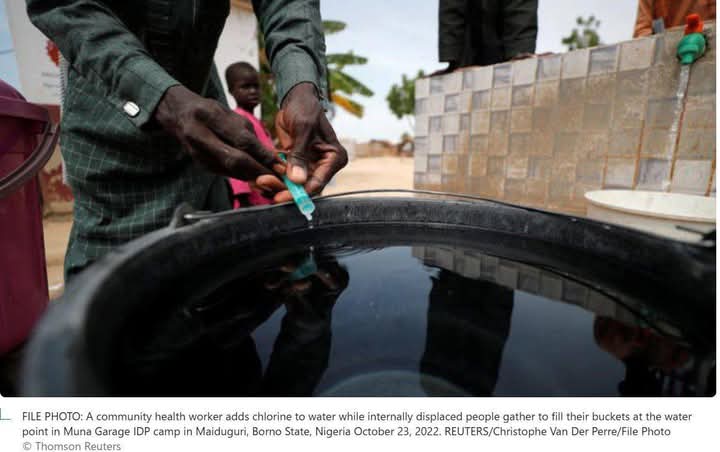
Cholera, a waterborne disease, is characterized by severe diarrhea, vomiting, and dehydration. Due to the widespread shortage of clean water in rural areas and slums, cholera is persistent in Nigeria.
It has gravely affected rural communities comprising Nasarawa-Burkullu, Gurusu, and Adabka, as many patients have resorted to self-medication in the absence of primary healthcare facilities.
As of present, over 21 patients have been admitted, out of which three have died as a result of delays in reaching Nasarawa General Hospital.
One of the residents disclosed that 53 people were infected in his village, lamenting the non-availability of medicine or drips, and that bandits prevent them from going to the city.
Zamfara has witnessed sporadic attacks from bandits who abduct and ask for ransom to be paid by villagers.
In Zamfara, rising violence in recent months has prevented residents from travelling and farming.
Residents and concerned citizens, fully cognizant of the gravity of the situation, urged the Zamfara government and the Non-Governmental Organisations (NGO) to swing into action, calling for the immediate deployment of emergency response teams and cholera treatment centres, as delay could cost more lives.