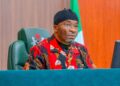


The Supreme Court has ruled that the President has the constitutional authority to declare a state of emergency in any state to prevent a breakdown of law and order or chaos. This decision was made in response to a lawsuit filed by 11 states, led by Adamawa, challenging President Bola Tinubu’s declaration of a state of emergency in Rivers State.
According to Section 305 of Nigeria’s 1999 Constitution, the President can declare a state of emergency under specific circumstances, including war, invasion, public disorder, natural disasters, or other threats to national stability. The court held that while the President has this power, it should not be used to suspend elected officials, including governors, deputy governors, and lawmakers, except in extraordinary situations.
The Supreme Court’s decision was split 6-1, with Justice Mohammed Idris stating that the President’s power to declare a state of emergency is subject to certain conditions and limitations. Justice Obande Ogbuinya dissented, arguing that the President’s powers do not extend to suspending democratically elected officials.
This ruling has sparked debate about the scope of presidential powers and the balance between national security and democratic governance. The decision is seen as a significant judicial clarification of the President’s emergency powers and sets a precedent for future cases.