
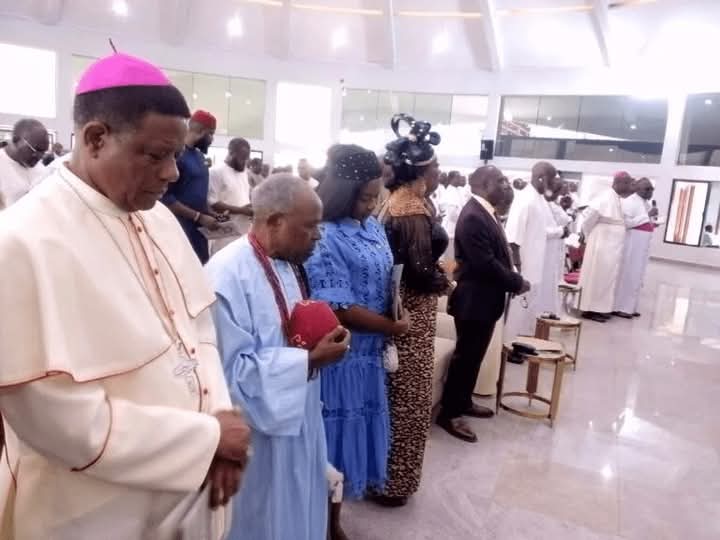
At a high-level colloquium on the rise of neo-religious practices in the South-East, Catholic Bishop of Nsukka Diocese, Most Reverend Godfrey Onah, delivered a sobering indictment of Nigeria’s leadership and religious institutions.
Onah stated this during the 2025 South-East Colloquium on “The Rise of Neo-Religious Practices, Self-Acclaimed Prophets, Ndi Eze-Nwoke and Ndi-Eze-Nwanyi; their effects on Ndi Igbo, their Faith and Traditional Ethos” on Friday in Enugu.
The Enugu Archdiocese of the Methodist Church of Nigeria organised the event.
The bishop noted that poverty created by bad governance and bad religion that preached the prosperity gospel and manipulated followers, forced neo-religious practices among Igbo youths.
Onah added that the quick rich syndrome among youths was also a driving force for the resurgence of these new religious practices.
The clergyman emphasised that religious leaders have a responsibility to share their experiences and knowledge of God with the world. Meanwhile, the government should manage common resources judiciously, as poverty can foster deception.
He, however, said that the new religion was not part of African or Igbo religion because it was not handed over to them but made by themselves.
Also speaking, the Prelate of the Methodist Church Nigeria, Dr Oliver Aba, noted that many religious and traditional leaders blessed and offered titles to the wealthy without inquiring about their source of wealth.
He said, “Religious leaders must rise to responsibility and know when to say yes or no. We must have the courage to say no to evil but bring sanity to churches because if we fail, tomorrow is in trouble”.
Prof Sam Amadi, a policy strategist and governance expert, said the phenomenon of “Okeite” was not the real problem but a disruption and destruction of how Igbo people relate and govern themselves, mostly in informal ways.
He emphasised that Igbo culture must be protected and nurtured to discourage people from respecting ill-got wealth, but stigmatised it.
On his part, Gov. Peter Mbah of Enugu State, said his administration had a culture that ensured meritocracy and also pushed values across all its systems.
Mbah, represented by the Secretary to the State Government, Prof. Chidiebere Onyia, said one of the key things his government did was to set out core values to guide his governance model.
According to him, anyone involved in actions that undermine the values of our state and government, and also fall within the ambit of breaking the law, will be held accountable.
Earlier, the Host and Methodist Archbishop of Enugu Archdiocese, Most Reverend Christopher Edeh, explained that the newfound religion threatened the fabric of the customs, traditions, and the spiritual heritage of the people.
According to him, these practices undermine the cultural values and Christian principles that had long guarded communities and led to religious confusion, entrenched insecurity, kidnappings, ritual murders, and all sorts of evil in society.
He said the programme was organised as part of activities marking the 50th anniversary of the Archdiocese and Diocese in Enugu Methodist Church, Nigeria.